Strengthening Next-Gen Trade Union Leadership in the Tannery Sector
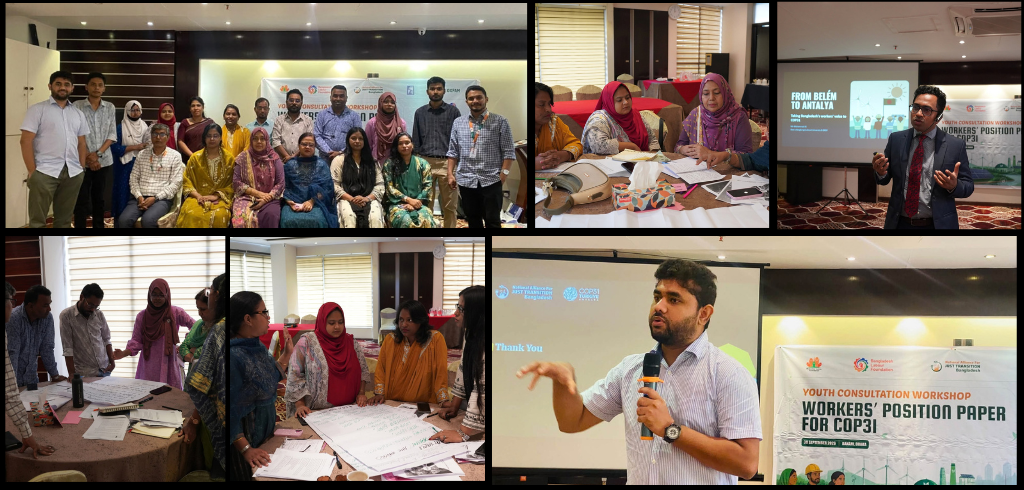
Bangladesh Labour Foundation (BLF), with the support of Mondiaal FNV, organized a series of training sessions for youth and women
A Study Dissemination on ‘Assessment of Technological Transition in the Apparel Sector of Bangladesh and Its Impact on Workers’ has arranged by Bangladesh Labour Foundation (BLF), Solidaridad Network Asia & Brac University.
Automation had led to a 30.58% decline in the total workforce across production processes in the ready-made garment (RMG) sector with the majority of the displaced workers being helpers, according to the study.
While automation has boosted economic growth and productivity in the sector, it has simultaneously created significant challenges for RMG workers—especially women, older employees, less literate individuals, and those lacking skills or confidence.
The sweater factory subsector experienced the highest workforce reduction, with a 37.03% decline per production line, followed by woven factories, which saw a 27.23% drop. In terms of specific production processes, the cutting stage showed the most pronounced reduction, with a 48.34% decrease in workers, whereas the sewing process experienced a comparatively smaller decline of 26.57%.
The findings emphasize the urgent need to address “Just Transition” issues, which aim to balance economic advancement with equitable outcomes for displaced workers, as highlighted in the study’s executive summary.

Bangladesh Labour Foundation (BLF), with the support of Mondiaal FNV, organized a series of training sessions for youth and women

Bangladesh Labour Foundation (BLF) organised a discussion forum in Keraniganj on International Women’s Day 2026 with local women who work

On the occasion of International Women’s Day 2026, Bangladesh Labour Foundation (BLF), in collaboration with the IBC Women’s Committee, organized

From 2nd March to 8th March 2026, Bangladesh Labour Foundation (BLF) ran a week-long online campaign marking International Women’s Day