
Keraniganj Observes World Day Against Child Labour 2026
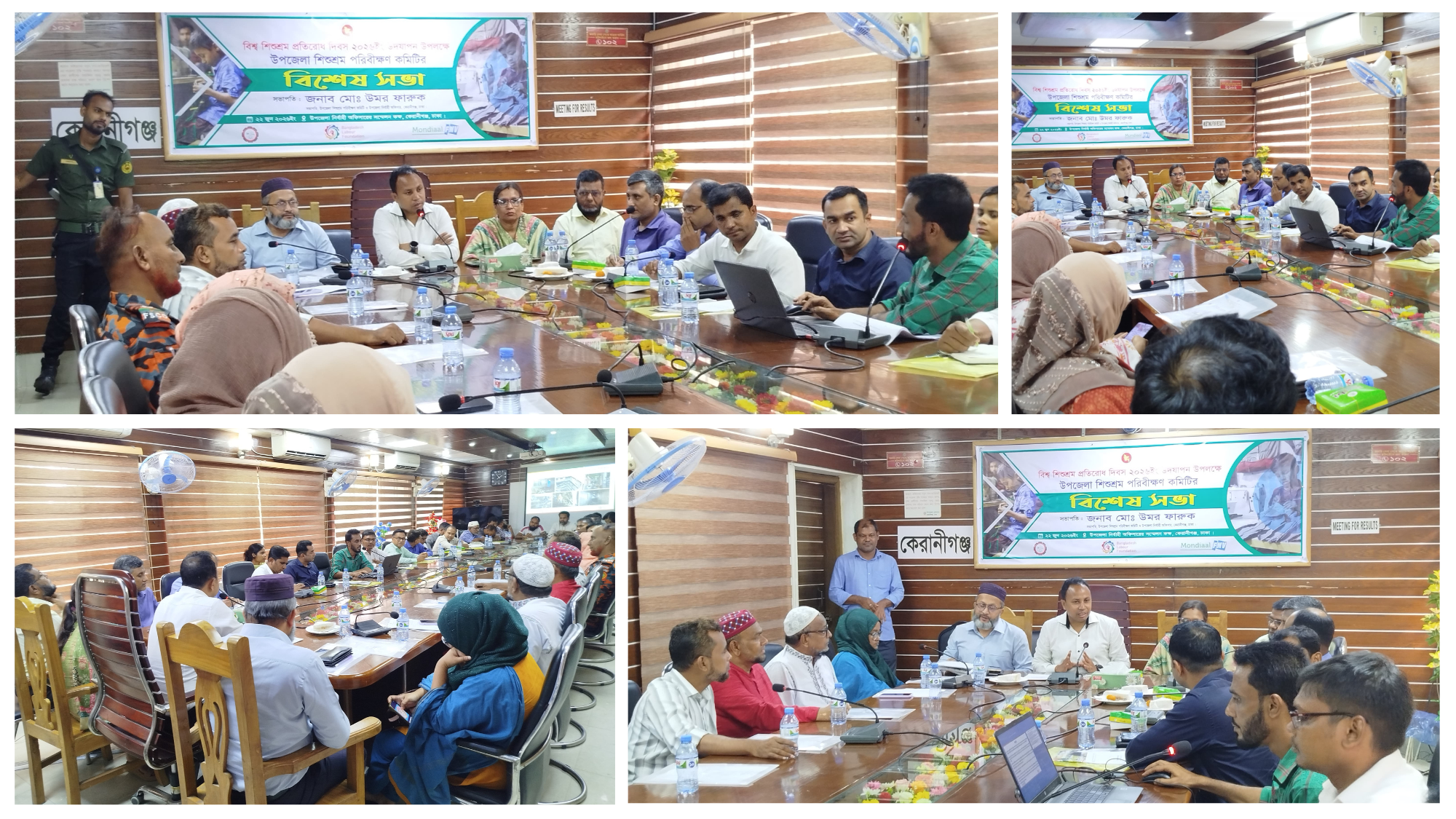
A special meeting was organized at Keraniganj Upazila to observe World Day Against Child Labour 2026 under the initiative of the Upazila Child Labour Monitoring Committee and with the support of Bangladesh Labour Foundation (BLF). The meeting brought together representatives from government authorities, workers’ organizations, owners’ associations, and relevant stakeholders to discuss the current situation of child labour and strengthen collective efforts toward its elimination.
Key Discussions
- The meeting reviewed the current child labour situation in Keraniganj’s garment sector, highlighting key challenges and exploring coordinated actions for prevention and elimination. Mr. Sarwar Alam, Senior Programme Officer of Bangladesh Labour Foundation (BLF), presented BLF’s initiatives, progress, and challenges in implementing the child labour elimination action plan.
- Participants emphasized that economic hardship, limited access to education, and lack of support systems are major factors contributing to child labour. The discussion highlighted the need for stronger collaboration among government agencies, NGOs, employers, and workers’ organizations.
- The Upazila Nirbahi Officer (UNO) and Chairperson of the Child Labour Elimination Monitoring Committee, Mr. Md. Omar Faruk, called for greater involvement of owners’ associations and collective responsibility to address the issue. Stakeholders also stressed the importance of awareness, family support programmes, and skills development opportunities to create alternatives for working children.
The meeting concluded with a shared commitment among stakeholders to strengthen collaboration, improve monitoring mechanisms, and work collectively toward creating a child labour-free and safer working environment in Keraniganj’s garment sector.