
Just Transition Begins with Workers’ Voices
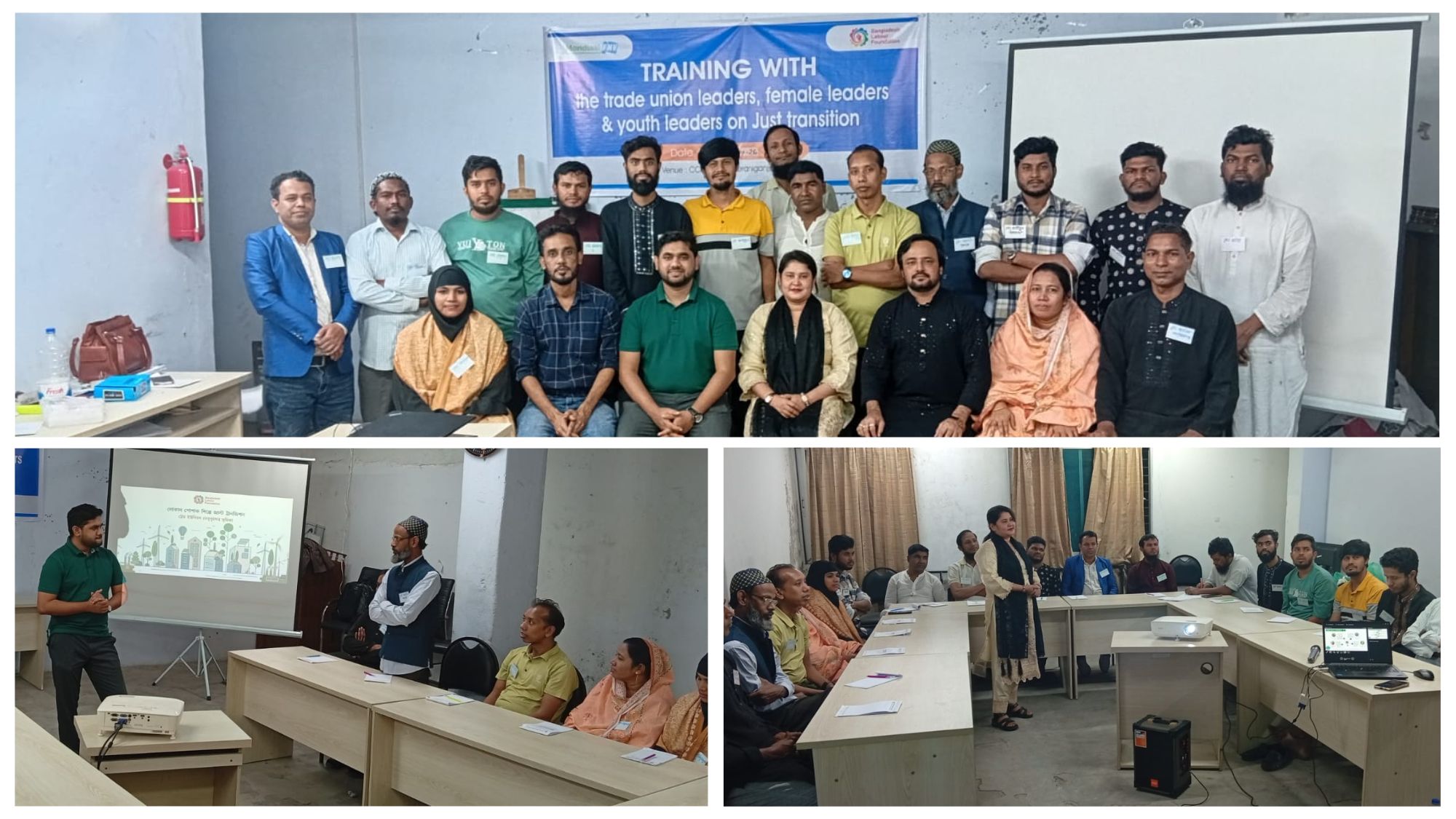
Many laborers from vulnerable regions are moving to places like Keraniganj in an attempt to survive as climate shocks like floods and river erosion continue to uproot families. Many are employed in the unorganized RMG industry, which lacks official contracts, social security, or legal protections. In order to meet the pressing need for a fair and inclusive transition, the Bangladesh Labour Foundation (BLF) arranged a capacity-building program for trade union leaders.
Building Capacity for a Just Transition
The goal of the training was to increase union officials’ comprehension of how changes in the economy, industry, climate, and technology affect workers’ lives. Making sure that these changes safeguard workers’ rights, increase social support, and encourage decent work especially in informal settings was emphasized.
Key Messages
The rise of informality and climate-related relocation are strongly related, making workers more exposed and vulnerable.
Informal RMG workers are still denied fundamental rights and security because of gaps in labor law coverage and social protection.
In order to promote an inclusive, rights-based change that puts workers’ interests and voices front and center, trade unions are essential.
No worker should be left behind in a just transition, particularly those who are most affected by climate change and economic fragility.
