
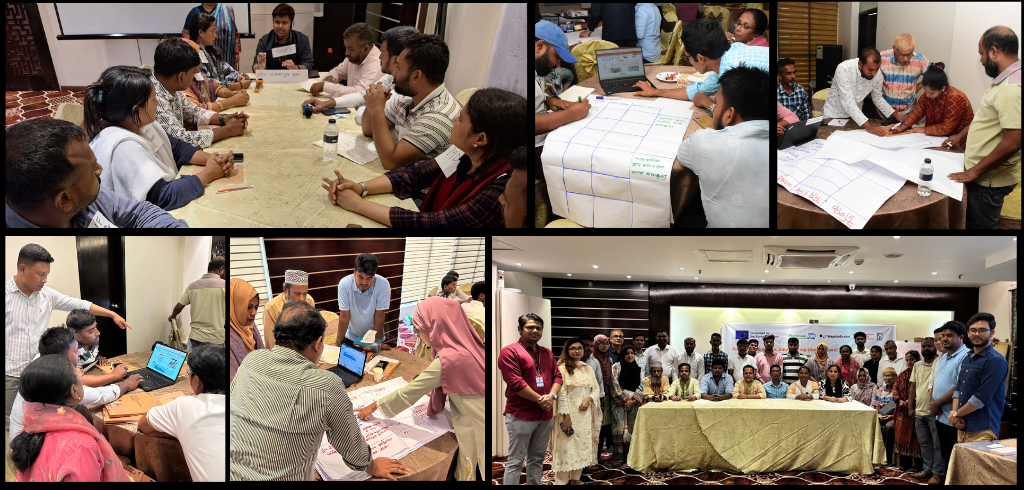
Bangladesh Labour Foundation (BLF), in collaboration with the Bangladesh Institute of Labour Studies (BILS), organized Cluster-Based Dissemination Workshops on 18 and 19 August 2026, bringing together RMG sector trade union leaders from Ashulia, Savar, Dhaka, Gazipur, and Narayanganj to strengthen evidence-based trade union advocacy and promote the use of worker-generated data in advancing decent work.
The workshops were organized under the Decent Work Due Diligence Bangladesh (DWDDB) Project, implemented by BLF in partnership with Mondiaal FNV versterkt werknemers wereldwijd, WageIndicator Foundation, and BILS, with the support of the European Union in Bangladesh.
𝗧𝘂𝗿𝗻𝗶𝗻𝗴 𝗪𝗼𝗿𝗸𝗲𝗿-𝗚𝗲𝗻𝗲𝗿𝗮𝘁𝗲𝗱 𝗗𝗮𝘁𝗮 𝗶𝗻𝘁𝗼 𝗘𝗳𝗳𝗲𝗰𝘁𝗶𝘃𝗲 𝗔𝗱𝘃𝗼𝗰𝗮𝗰𝘆
The workshops focused on presenting the findings of the Decent Work Due Diligence Check (DWDDC) Survey and building participants’ practical skills in using the online DWDDC Dashboard. Through hands-on exercises, trade union leaders learned how to access, navigate, interpret, and present data to identify workplace challenges, set negotiation priorities, strengthen collective bargaining, and support evidence-based dialogue with employers and other stakeholders.
𝗞𝗲𝘆 𝗔𝗰𝘁𝗶𝘃𝗶𝘁𝗶𝗲𝘀 𝗮𝗻𝗱 𝗗𝗶𝘀𝗰𝘂𝘀𝘀𝗶𝗼𝗻𝘀
Sharing key findings from the Decent Work Due Diligence Check (DWDDC) Survey
Strengthening digital literacy and practical skills in using the online DWDDC Dashboard
Conducting guided Dashboard exercises and group work to interpret and present worker-generated data
Organizing a mock press conference to practise communicating evidence-based advocacy messages
Engaging in collective bargaining and negotiation role-plays to translate data into clear demands and practical actions
Exploring how data-driven advocacy can support workplace negotiations and influence cluster-level, sectoral, and national discussions
The workshops concluded with a shared commitment to further strengthen the DWDDC Survey and Dashboard as worker-centred, evidence-based tools for advancing decent work. Through these initiatives, BLF and its partners continue to empower trade union leaders with the digital skills, evidence, and practical advocacy tools needed to amplify workers’ voices, strengthen collective bargaining, and promote meaningful improvements in working conditions.