
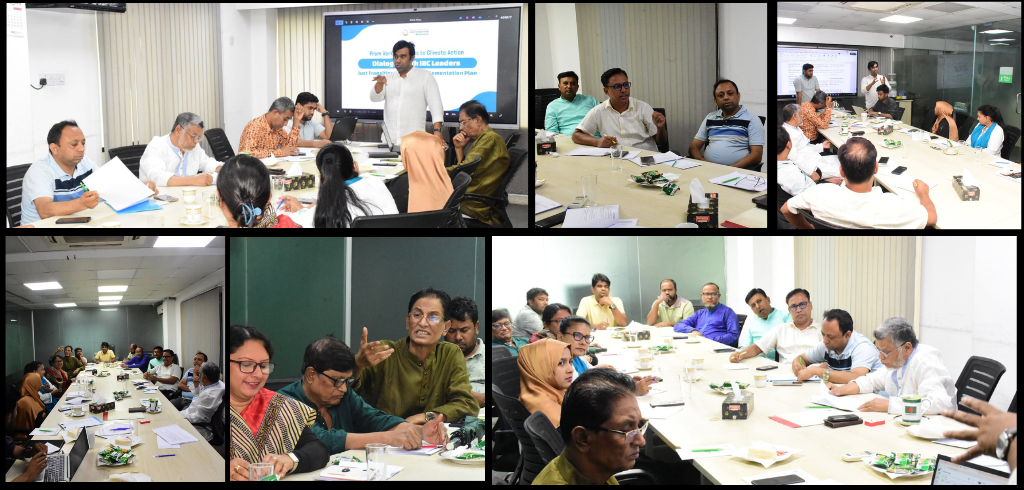
The “𝗙𝗿𝗼𝗺 𝗪𝗼𝗿𝗸𝗲𝗿𝘀’ 𝗩𝗼𝗶𝗰𝗲𝘀 𝘁𝗼 𝗖𝗹𝗶𝗺𝗮𝘁𝗲 𝗔𝗰𝘁𝗶𝗼𝗻 | 𝗗𝗶𝗮𝗹𝗼𝗴𝘂𝗲 𝘄𝗶𝘁𝗵 𝗜𝗻𝗱𝘂𝘀𝘁𝗿𝗶𝗮𝗹 𝗕𝗮𝗻𝗴𝗹𝗮𝗱𝗲𝘀𝗵 𝗖𝗼𝘂𝗻𝗰𝗶𝗹 (𝗜𝗕𝗖) 𝗟𝗲𝗮𝗱𝗲𝗿𝘀” was organized by the National Alliance for Just Transition – Bangladesh (NAJTB) and Bangladesh Labour Foundation (BLF) as part of their ongoing national consultation process to develop the Just Transition Chapter of Bangladesh’s NDC 3.0 Implementation Plan, ensuring that workers’ voices and rights remain central to climate action.
The dialogue brought together leaders of the Industrial Bangladesh Council (IBC) to discuss the challenges and opportunities associated with the transition towards a low-carbon and climate-resilient economy, emphasizing the importance of protecting workers’ livelihoods, promoting decent work, and ensuring a fair and inclusive industrial transition.
Advancing a Worker-Centred Just Transition
The discussion focused on ensuring that Bangladesh’s green industrial transition delivers not only environmental benefits but also secure employment, fair wages, stronger labour rights, and improved working conditions. Participants highlighted the importance of meaningful trade union participation in transition planning and the need for policies that protect workers affected by technological change and industrial transformation.
Key Discussions
Protecting workers’ jobs, wages, labour rights, and occupational safety throughout the transition towards a low-carbon economy
Ensuring meaningful participation of trade unions and workers’ representative organisations in climate policy development and industrial transition planning
Strengthening social protection mechanisms for workers affected by technological advancements and changes in industrial production
Promoting practical reskilling and upskilling opportunities to prepare workers for emerging green jobs and changing labour market demands
Encouraging safer workplaces, cleaner production processes, and effective pollution control measures across industries
Ensuring that climate finance, green investments, and industrial incentives generate tangible benefits for workers alongside environmental improvements
The dialogue reaffirmed the importance of placing workers at the centre of climate action and ensuring that the transition towards a greener economy does not compromise employment security, workers’ rights, or social justice. Meaningful engagement with trade unions and other workers’ representative organisations will be essential to building an inclusive and sustainable industrial future for Bangladesh.
The recommendations gathered from IBC leaders will contribute to the Workers-Centred NDC 3.0 Just Transition Implementation Plan, being developed by NAJTB and BLF through consultations with workers, trade unions, and other stakeholders. The consolidated recommendations will be submitted to the Government of Bangladesh for consideration in the final implementation plan, supporting a transition that combines environmental sustainability with decent work, stronger labour rights, and social protection for all workers.